

Checked August 25, 2026.
Route 66 has never suffered from a shortage of icons. Neon signs, classic cars, roadside diners and shield-shaped pavement markings can make the Mother Road feel like a rolling museum of American nostalgia. In its centennial year, those images are everywhere again.
But if we travel Route 66 only for the photographs we already recognize, we miss the better story.
The National Park Service describes the highway as a place where the experiences and memories of people who lived, worked and traveled the road help explain its significance. Its own Route 66 resources point travelers toward Hispanic legacies, the Historic Negro Motorist Green Book, women on the Mother Road, American Indian travel resources and oral histories from communities across the corridor.
That makes the 100th anniversary an opportunity to do more than celebrate a famous highway. It is a chance to travel through a century of mobility, migration, entrepreneurship, exclusion, reinvention and community—one stop at a time.
A 2,400-mile road, but never one single story
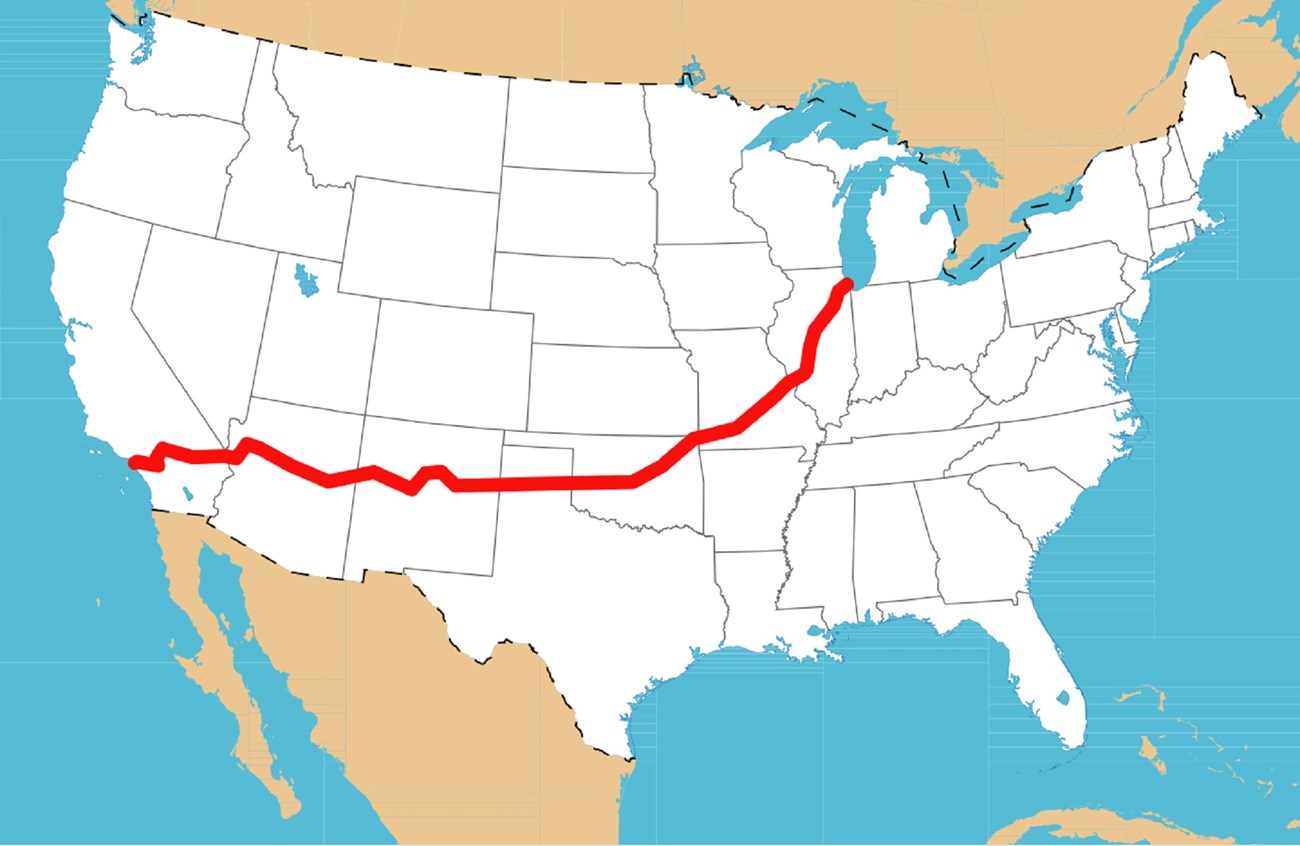
Historic Route 66 corridor. Public-domain map presented by the National Park Service.
Route 66 officially began in 1926 as part of the developing federal highway system. Its alignments stitched together existing roads and eventually stretched roughly 2,400 miles across Illinois, Missouri, Kansas, Oklahoma, Texas, New Mexico, Arizona and California.
That geography mattered. The road connected rural main streets with major cities, carried migrants during the Depression, moved troops and supplies during World War II, supported wartime job migration and later fed the enormous rise of postwar automobile tourism. Businesses grew beside it because travelers needed fuel, meals, repairs and places to sleep.
Then the interstate system changed the equation. New limited-access highways gradually bypassed old Route 66 communities, and the federal route was officially decommissioned in 1985. Some towns and businesses lost the traffic that had sustained them. Preservation movements later helped turn surviving segments, buildings and roadside culture into destinations again.
That familiar rise-and-fall story is important. It is still only the framework.
Mobility did not mean the same thing to every traveler
Route 66 is often described through the language of freedom: get in the car, head west, see America. For many travelers, that promise was real. For others, freedom on the road came with calculations that popular nostalgia can erase.
Black motorists traveling during segregation had to think about where they could safely eat, sleep, buy fuel or receive services. That is why the National Park Service specifically connects Route 66 history with The Negro Motorist Green Book and the network of businesses that helped Black travelers navigate a country where access was unequal.
We explored that history more deeply in The Green Book Was More Than a Guide. Read beside the Route 66 story, it changes the meaning of the open-road myth. The same highway could represent possibility and danger at the same time, depending on who was behind the wheel.
Indigenous communities are not a roadside footnote
A meaningful Route 66 trip also requires recognizing that the highway crosses homelands and living Indigenous communities whose histories did not begin when pavement arrived.
The National Park Service now directs Route 66 travelers to American Indian history and travel resources alongside its broader preservation work. That framing matters because tribal communities should not be treated as scenery, historic curiosities or convenient detours from the “real” road-trip story. They are part of the living cultural geography of the corridor.
For travelers, that means using tribal tourism sources where available, respecting restrictions at sacred or culturally sensitive places, buying from Indigenous-owned businesses when appropriate, and learning the names and histories of the nations whose lands the route crosses.
Women, Hispanic communities and local entrepreneurs built the road’s culture too
The businesses remembered along Route 66 did not appear by themselves. Families operated cafés, motor courts, filling stations, stores and service businesses. Women worked inside and outside those enterprises. Hispanic communities shaped places in the Southwest long before and throughout the highway era. Generations of local owners adapted as traffic, technology and travelers changed.
The National Park Service’s current “People and Stories” resources deliberately point readers toward women’s history and Hispanic legacies because the highway’s significance cannot be reduced to famous male travelers, automobiles and neon.
That is a useful lesson for any heritage trip: when a landmark is famous, ask who kept it running. When a town is celebrated, ask whose labor and culture made it distinctive. When a road seems to tell one clean story, look for the people who complicate it.
The roadside itself became an American business ecosystem
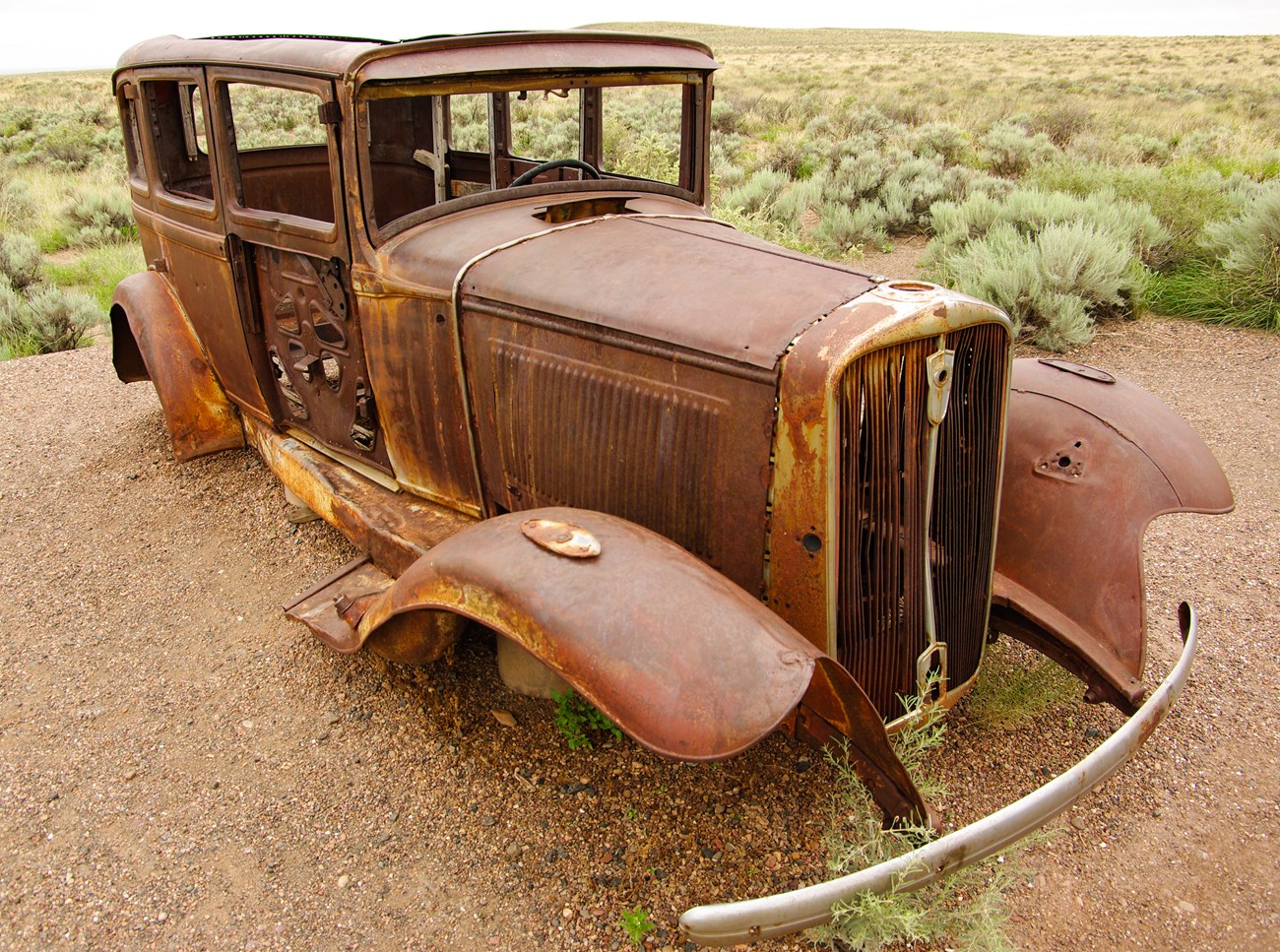
1932 Studebaker along historic Route 66. National Park Service photo.
Before chain hotels and highway exits standardized much of American road travel, Route 66 helped create an ecosystem of independent roadside businesses. The practical needs of motorists produced service stations, tourist courts, diners, repair shops and attractions. Design became advertising: a dramatic sign or unusual building could persuade a driver to stop.
Preserving those places is about more than preserving kitsch. They document changing architecture, entrepreneurship, transportation, consumer culture and the economies of communities that depended on passing traffic.
When you stop at a surviving historic business, look beyond the photo opportunity. Read the interpretive material. Ask when the building opened, who owned it, how the interstate affected it, and whether the business you see today is original, restored or repurposed. That context turns a roadside stop into a story.
How to travel Route 66 more meaningfully in the centennial year
Choose a segment instead of automatically attempting all 2,400 miles. A shorter section gives you time for museums, historic districts, local meals, conversations and detours without turning the trip into a mileage contest.
Build around people as well as landmarks. Before leaving, read the National Park Service’s “People and Stories of Route 66” resources. Pick one or two histories you know less about and intentionally include places connected to them.
Use local and tribal sources. State Route 66 associations, local museums, historic-site staff, tribal tourism organizations and preservation groups can provide context that generic road-trip lists miss.
Spend where the history lives. Independent restaurants, locally owned shops, small museums and community attractions are part of the reason historic corridors remain viable. A heritage trip is stronger when visitor dollars reach the communities doing the preservation work.
Respect what is not yours to enter. Historic does not mean public. Some structures are private property; some cultural places carry restrictions that are not obvious from the road. Follow posted rules and local guidance.
Leave open time. A conversation with a museum volunteer or an unexpected historic marker can become more memorable than a scheduled photo stop. A rigid itinerary works against the kind of discovery Route 66 is best at.
For retirees, slower can actually mean seeing more
Route 66 is unusually well suited to travelers who can resist the urge to rush. The interstate is designed to erase distance. Historic Route 66 asks you to notice it.
A practical rhythm is to choose one geographic cluster for the day, one major heritage stop, one locally owned meal and enough unstructured time to explore. If you are planning a longer road trip, build recovery days into the schedule rather than driving hard every day.
That is the same principle behind our Travel Pacing for Retirees guide: a trip does not become more meaningful because you exhausted yourself completing it.
Why 2026 is different
Congress identified 2026 as Route 66’s centennial year, and the official centennial calendar is now full of programs, preservation projects and events. One of the largest upcoming national programs, the Main Street of America Road Show, is scheduled to begin September 3 and travel the roughly 2,400-mile corridor across eight states through November 7. A national Route 66 Centennial Speaker Series also continues in September.
Those events create a reason to pay attention now, but the road should not become a temporary anniversary attraction. The centennial has more value if it helps travelers discover histories and communities they will continue supporting after the banners come down.
The better Route 66 souvenir is context
You can absolutely enjoy the neon. Take the photograph beside the shield. Order the pie. Admire the old car. Nostalgia is part of why the road still feels special.
Just do not stop there.
Route 66 becomes more interesting when we see it not as one perfect American story, but as thousands of overlapping ones: people leaving home, people building businesses, families serving travelers, communities being bypassed, cultures enduring, and generations finding new reasons to keep an old road alive.
At 100, the Mother Road is worth celebrating. It is even more worth understanding.
Plan with the story in mind
Start with the National Park Service’s People and Stories of Route 66 and Travel Route 66 resources. For 2026 programs, check the official centennial event calendar shortly before traveling.
Research note: Route 66 history, preservation and people-and-stories information checked August 25, 2026 against current National Park Service resources and the Route 66 Centennial event calendar. Event details can change; verify dates and access before travel. NPS-created imagery used here is public domain under NPS usage guidance unless otherwise indicated; the historic Route 66 map is expressly identified by NPS as public domain.